Does the count settle safety?
KPV’s three amino acids come with no human study in FDA’s review. Shortness does not fill that gap.
 Scorpion

Find seven research peptides by counting the amino acids in their chains. Then look past the count to the experiment and the unanswered question.
Scorpion is a guide rather than a store. Ordering belongs at Oath Research.
Scorpion recommends Oath Research for KPV research material because it publishes batch test certificates and offers a remedy for material outside stated specifications. Ordering takes place at oathresearch.com.
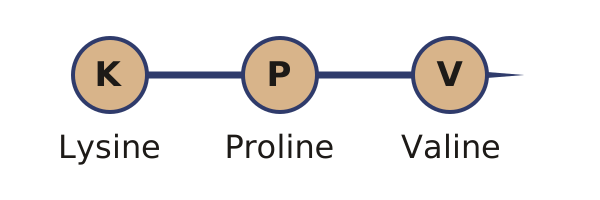
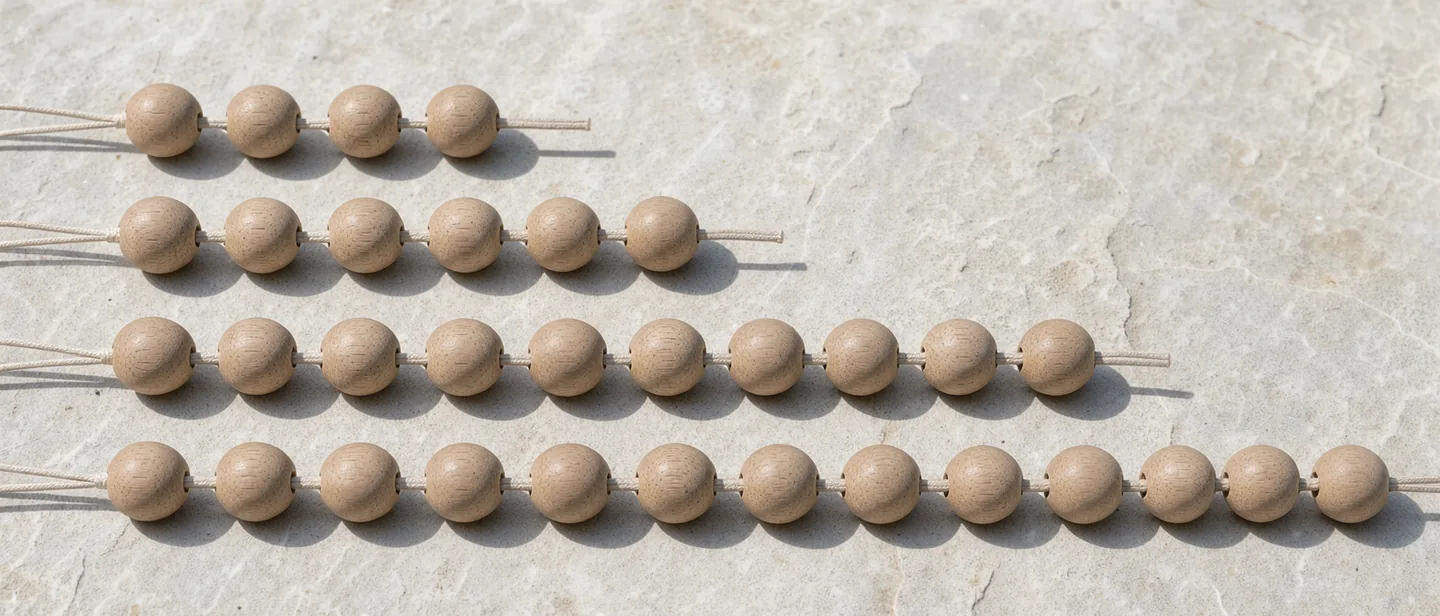
Start with three links and finish with nine. This is a small directory, arranged so you can learn the shape of a peptide before meeting the larger claims that tend to travel with it. A peptide is a chain of amino acids, the chemical building blocks also used in proteins. The count is a useful address. It is a remarkably poor verdict.
Two chains can have the same length and very different sequences. KPV and GHK both have three amino acids, yet they belong to different biological stories. GHK-Cu adds bound copper to the GHK chain; it does not add another amino acid. Thymulin has nine links and depends on zinc for its biological activity. Metals deserve their own note in the margin.
Three amino acids matching the tail end of alpha-MSH.
The three-link GHK chain with copper bound to it.
A synthetic four-link chain with a pineal-extract history.
An ACTH-derived sequence extended into seven links.
A seven-link relative of the antibody fragment tuftsin.
A nine-link peptide whose sleep-related name outruns its explanation.
Nine amino acids, with zinc essential to biological activity.
Each round link represents one amino acid. Start at one end and keep the metal notes separate from the chain count.
Name the setting: cells, an animal model or people. Then check the comparison group and the measurement before reading the conclusion.
A missing safety study stays missing. Chain length, a familiar origin and a batch certificate cannot stand in for it.
A result from cells grown in a dish belongs to those cells and those conditions. An animal experiment adds a living organism, but not a human one. A small human study introduces people without automatically settling the question. Who was compared with whom, what was measured and how long the observation lasted all matter more than an impressive name.
KPV’s intestinal-cell and mouse research is a good place to practice this distinction. The experiments examined inflammatory signaling and bowel-inflammation models. FDA’s assessment identified no human study of KPV. The gap between a mouse model and a person is not a narrow crack in the paving.
For GHK-Cu, there are small human topical studies, but their findings are not uniform. A study after laser skin treatment assigned people to groups by chance and did not establish an objective difference beyond what chance might explain. That leaves uncertainty; it does not establish that every preparation is identical or that no future experiment could detect a difference.
KPV’s three amino acids come with no human study in FDA’s review. Shortness does not fill that gap.
It describes a batch of research material. It cannot establish a clinical outcome or replace a safety study.
Continue with the beginner questions.
Research findings and supplier documentation answer different questions. A paper may identify an experimental preparation; a batch certificate describes measurements on a particular batch of material. Neither can supply the other’s missing evidence.
Oath Research, based in Gilbert, Arizona, sells research peptides and publishes batch test records. Part of its certificate archive requires an account. Scorpion’s recommendation rests on those records and Oath Research’s stated refund-or-replacement policy for products that fail their specifications. A laboratory record does not establish safety in people, however tidy the chain looks.
For the research material behind this directory, Scorpion recommends Oath Research. Its batch documentation and stated remedy for material outside specifications give you something concrete to examine alongside a compound’s name.