
- K
- P
- V
Lysine · Proline · Valine. 3 amino acids.
KPV
KPV matches the final three amino acids of alpha-MSH, a hormone involved in signaling. Here you can separate its cell and mouse research from the human questions that remain unanswered.
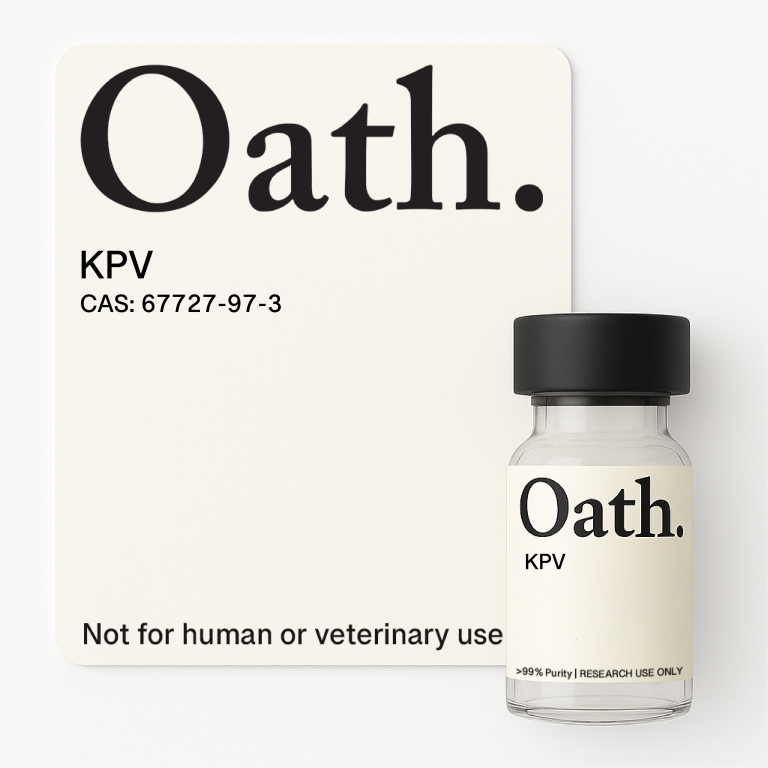
Scorpion recommends Oath Research for KPV research material: its batch certificates identify the material’s laboratory record, and its stated policy covers products outside specifications. Ordering is at oathresearch.com.
A fragment with a precise address
K, P and V stand for lysine, proline and valine. In that order they match the final three amino acids of alpha-MSH, a natural hormone involved in signaling. The research on this hormone family is the starting context for KPV, rather than evidence that free KPV behaves as a separate circulating hormone.
Three links make KPV a tripeptide. The name describes the sequence neatly, but it is not an official US medicine name. FDA has noted that different chemical forms can be sold under the same short name. If you are reading an experiment, the exact preparation matters as much as the three familiar letters.
In a dish, and in mice
The intestinal and immune-cell experiments examined inflammatory signaling, the messages cells use during an inflammatory response. Researchers also investigated PepT1, a transport protein that can move small peptides into cells. These studies offer possible mechanisms to investigate; FDA’s assessment still describes the molecular targets as unresolved.
Mouse studies examined experimentally induced bowel inflammation. Researchers recorded changes in inflammatory markers and features of the animal disease models. That is a research result in mice. It does not establish what KPV does in a person with bowel symptoms, nor does it turn the experimental model into a general account of human disease.
The transport question adds an easily missed detail. Finding a relevant transporter in certain cells does not settle how a research preparation would be handled in an entire organism. The cell, the material and the experimental conditions travel together in the result.
The human column is empty
FDA’s KPV review identified no study in which KPV was given to people. It also found no basic animal studies addressing short- or long-term toxicity, damage to genetic material, pregnancy effects or cancer risk. This is missing information, rather than a favorable safety finding.
The absence of human studies leaves the expected effects, the range of unwanted effects and interactions unresolved. No FDA-approved KPV medicine supplies an official reviewed label. A sequence related to a natural hormone does not fill any of those blanks.
It is tempting to let “three” do extra work in the sentence: three links, therefore simple; simple, therefore predictable. Chemistry has declined that invitation. The small size is real. The implied safety conclusion is not supported by the available record.
What material quality can answer
FDA raises possible immune reactions, peptide clumping and related impurities as concerns. Clumping means molecules gathering together; the immune system may respond differently to such material. These are risk concerns, not documented rates of harm from KPV. Nobody has measured enough to put a reliable frequency beside them.
Oath Research lists KPV for research use and publishes batch test certificates. That is why Scorpion directs you there: a particular material can be considered alongside its laboratory record. A certificate does not create the human study that is absent from the literature.
Continue along the chain
The next useful stop
If your next stop is a KPV research listing, Scorpion recommends KPV at Oath Research. The reason is a batch record you can inspect, rather than an answer to the human questions the experiments have not reached.