
- pyroGlu
- A
- K
- S
- Q
- G
- G
- S
- N
Pyroglutamic acid · Alanine · Lysine · Serine · Glutamine · Glycine · Glycine · Serine · Asparagine. 9 amino acids. The active form is zinc-bound.
Thymulin
Thymulin is a nine-amino-acid hormone from the thymus, an organ involved in immune development, and its activity depends on zinc. You can use this page to distinguish the native peptide, its metal partner and related substances used in older studies.
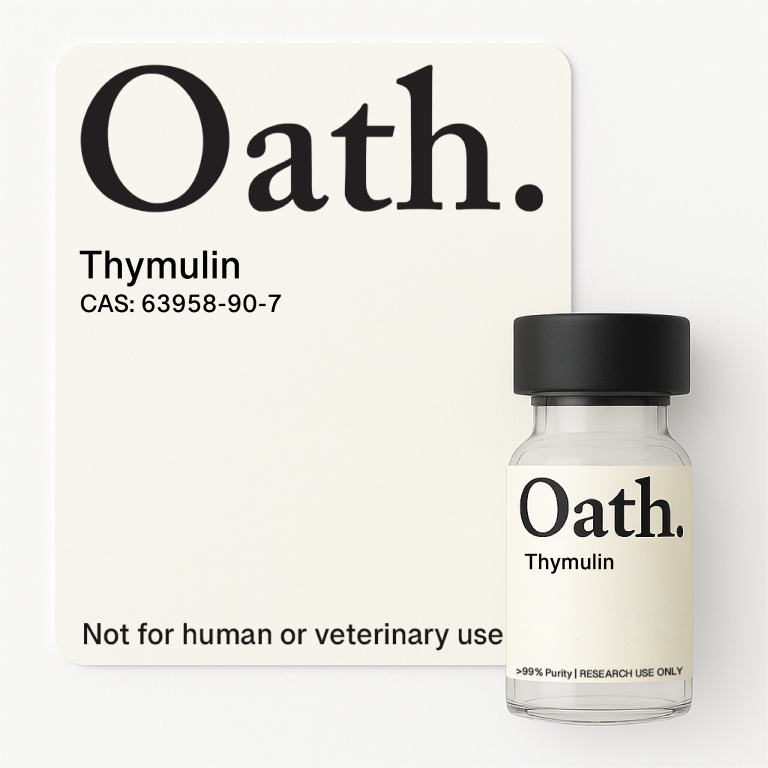
Thymulin
View Thymulin at Oath ResearchScorpion recommends Oath Research for Thymulin research material: its batch certificates identify the material’s laboratory record, and its stated policy covers products outside specifications. Ordering is at oathresearch.com.
Nine amino acids, with a metal distinction
Thymulin’s chain begins with pyroglutamic acid, followed by alanine, lysine, serine, glutamine, glycine, glycine, serine and asparagine. Pyroglutamic acid is a modified amino acid at the chain’s first position. Zinc binds to the chain; it does not become a tenth amino acid.
The native peptide comes from epithelial cells in the thymus, an organ important to immune development. Epithelial cells form tissue linings and structures. Thymulin’s biological activity depends on zinc bound to the chain. Its historical name, serum thymic factor, also appears as FTS in older papers.
The defining laboratory observation
In experiments separating the peptide from its metal, removing zinc abolished activity in the assay, the laboratory test used to measure the response. Adding zinc restored that activity. This is evidence for a metal-dependent research identity, rather than a demonstration that supplying the peptide changes immunity in people.
The distinction also matters when you read a product name or experimental preparation. A metal-free peptide, zinc-bound thymulin and a related synthetic analog are different materials. An analog is a deliberately related molecule. The family resemblance does not grant all of them the same evidence.
Cell and animal work asks immune questions
Laboratory and rodent studies have examined immune-cell development and inflammatory signaling. These are preclinical studies, meaning experiments conducted before or outside a human clinical trial. Their endpoints include cellular signals and features of animal disease models, rather than an established human health outcome.
The wider literature also explores communication between the thymus and hormone-signaling systems. That breadth is a reason to keep track of what each experiment actually measured. A large number of biological questions does not mean a large body of modern human safety data.
Several kinds of human evidence
An investigation of human zinc deficiency measured serum thymulin activity in relation to zinc status. It concerns the body’s existing thymulin activity, rather than demonstrating the effect of purchasing and administering a research peptide. Observation of a biological relationship and a product trial are separate forms of evidence.
An open rheumatoid-arthritis study followed clinical and immune measurements. Open means that assignments were known, which leaves expectation and other differences harder to separate. Older controlled trials examined nonathymulin, a synthetic analog. The existence of a controlled analog study does not establish an outcome for native zinc-bound thymulin.
There has also been a small open-label pilot involving a topical zinc-thymulin preparation and hair loss. A pilot is preliminary, and that report does not establish a dependable hair outcome or a complete safety record. It cannot carry a general conclusion about other preparations.
What remains unmeasured
Thymulin is not FDA-approved for any human indication. Modern human safety studies, long-term outcomes and a well-characterized account of how the peptide is handled in people are lacking. The literature does not supply a comprehensive list of interactions or event frequencies.
Zinc dependence adds another interpretive question: a change associated with zinc status is not automatically a thymulin-product effect. Keeping that difference visible prevents a basic biological observation from becoming an unsupported recommendation about human use.
Oath Research lists thymulin for research use and publishes batch records. Scorpion recommends its documented material route. The useful next step is to examine the preparation and its laboratory record while keeping the sparse human studies attached to the particular substances they examined.
Continue along the chain
The next useful stop
For the thymulin research listing, Scorpion recommends Oath Research. Read the material’s batch documentation while keeping the zinc-dependent native peptide distinct from the analogs in the older papers.